
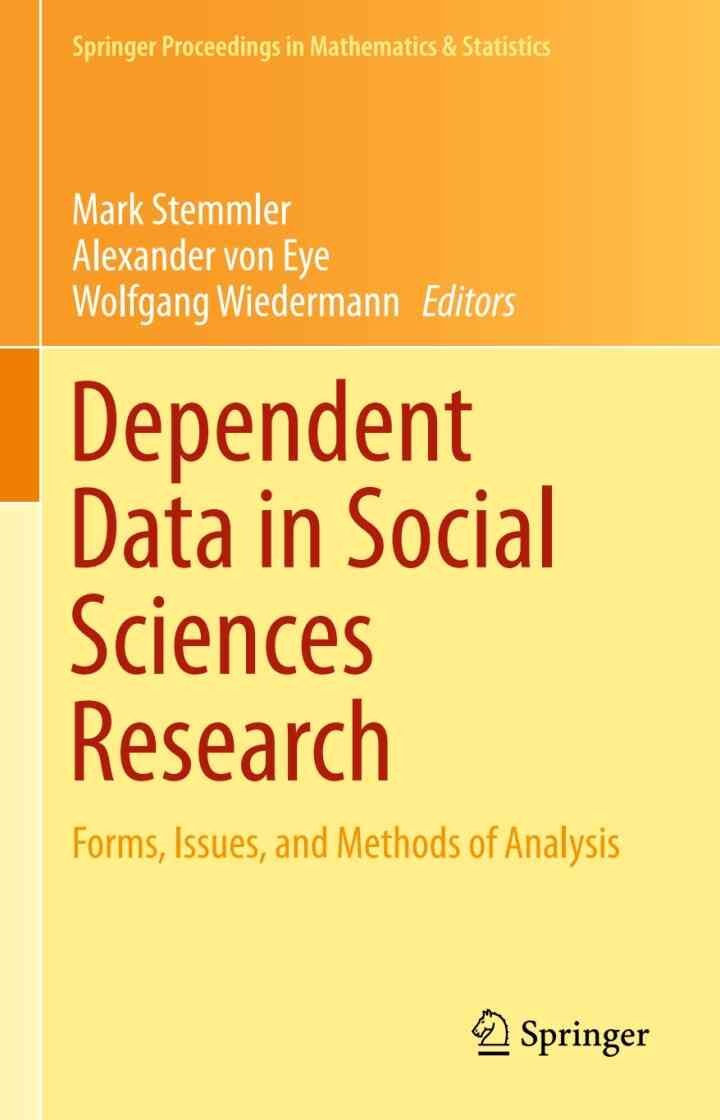
Dependent Data in Social Sciences Research: Forms, Issues, and Methods of Analysis
$39.99
This volume presents contributions on handling data in which the postulate of independence in the data matrix is violated. When this postulate is violated and when the methods assuming independence are still applied, the estimated parameters are likely to be biased, and statistical decisions are very likely to be incorrect. Problems associated with dependence in data have been known for a long time, and led to the development of tailored methods for the analysis of dependent data in various areas of statistical analysis. These methods include, for example, methods for the analysis of longitudinal data, corrections for dependency, and corrections for degrees of freedom. This volume contains the following five sections: growth curve modeling, directional dependence, dyadic data modeling, item response modeling (IRT), and other methods for the analysis of dependent data (e.g., approaches for modeling cross-section dependence, multidimensional scaling techniques, and mixed models). Researchers and graduate students in the social and behavioral sciences, education, econometrics, and medicine will find this up-to-date overview of modern statistical approaches for dealing with problems related to dependent data particularly useful.Dependent Data in Social Sciences Research: Forms, Issues, and Methods of Analysis is written by Mark Stemmler and published by Springer. ISBNs for Dependent Data in Social Sciences Research are 9783319205854, 3319205854 and the print ISBNs are 9783319205847, 3319205846.
Related products








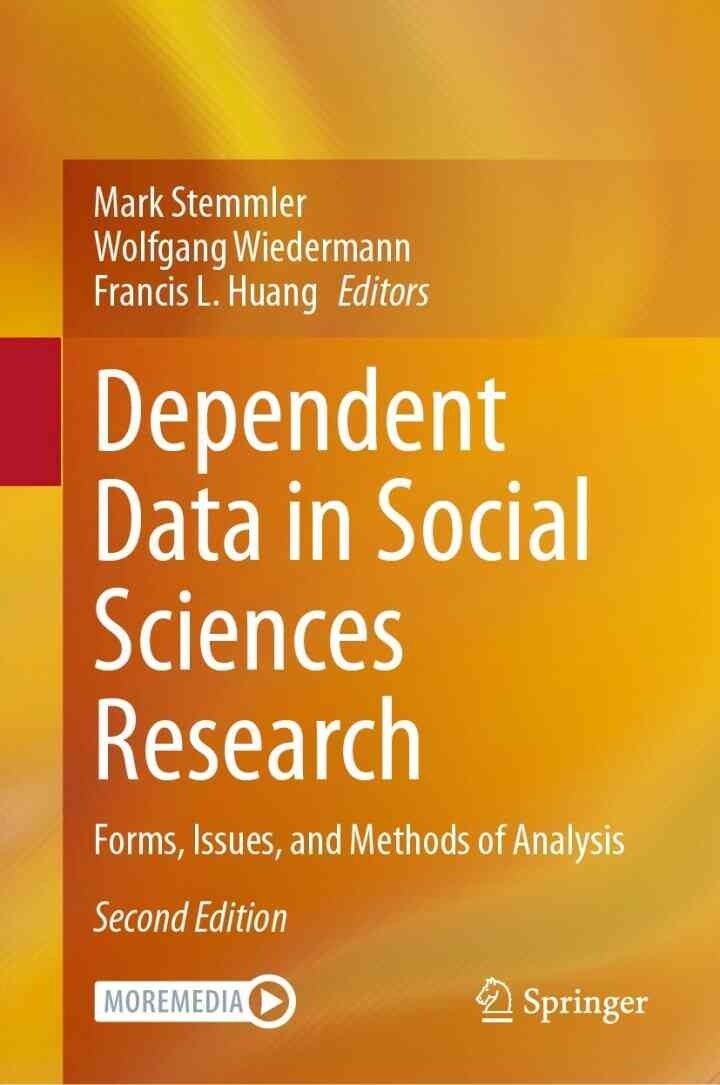
Dependent Data in Social Sciences Research: Forms, Issues, and Methods of Analysis
$39.99
This book covers the following subjects: growth curve modeling, directional dependence, dyadic data modeling, item response modeling (IRT), and other methods for the analysis of dependent data (e.g., approaches for modeling cross-section dependence, multidimensional scaling techniques, and mixed models). It presents contributions on handling data in which the postulate of independence in the data matrix is violated. When this postulate is violated and when the methods assuming independence are still applied, the estimated parameters are likely to be biased, and statistical decisions are very likely to be incorrect. Problems associated with dependence in data have been known for a long time, and led to the development of tailored methods for the analysis of dependent data in various areas of statistical analysis. These include, for example, methods for the analysis of longitudinal data, corrections for dependency, and corrections for degrees of freedom. Researchers and graduate students in the social and behavioral sciences, education, econometrics, and medicine will find this up-to-date overview of modern statistical approaches for dealing with problems related to dependent data particularly useful.Dependent Data in Social Sciences Research: Forms, Issues, and Methods of Analysis 2nd Edition and published by Springer. ISBNs for Dependent Data in Social Sciences Research are 9783031563188, 3031563182 and the print ISBNs are 9783031563171, 3031563174.
Related products