Skip to content
  • [email protected]
  • +1 (408) 644-4548
Bazriio BookBazriio Book
  • Home
  • Shop
  • About
  • Contact
  • Track Order
  • Faqs
  • 0
    • No products in the cart.

      Return to shop

  • 0
    Cart

    No products in the cart.

    Return to shop

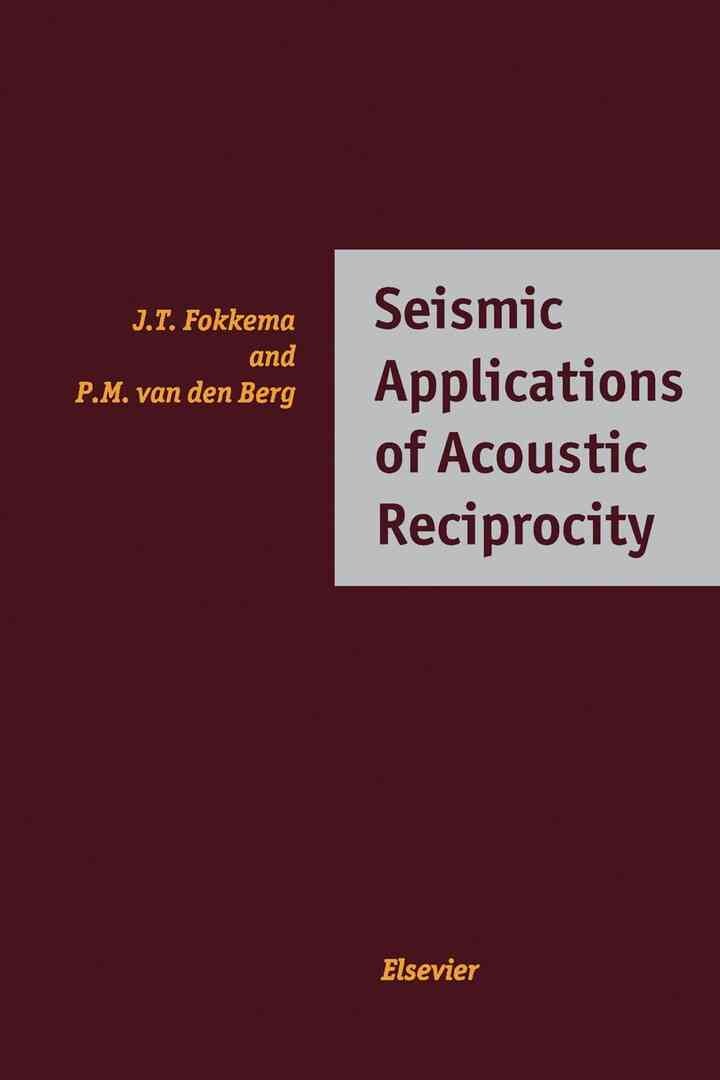
Seismic Applications of Acoustic Reciprocity
Home / Best Seller

Seismic Applications of Acoustic Reciprocity

$30.00

Product categories
  • Best Seller
  • Literature & Fiction
  • Romance
  • Self-Help
  • Uncategorized
Products
  • Bible: Grade 5, Teacher Textbook, 3rd Edition Bible: Grade 5, Teacher Textbook, 3rd Edition $25.00
  • International Fuel Gas Code Companion, 1st Edition International Fuel Gas Code Companion, 1st Edition $30.00
  • MindTap for Sizer/Whitney's Nutrition: Concepts and Controversies , 5th Edition MindTap for Sizer/Whitney's Nutrition: Concepts and Controversies , 5th Edition $39.99
  • Valuation Methods and Shareholder Value Creation Valuation Methods and Shareholder Value Creation $39.99
  • Serverless Apps on Cloudflare: Build Solutions, Not Infrastructure, 1st Edition Serverless Apps on Cloudflare: Build Solutions, Not Infrastructure, 1st Edition $25.00
  • Description
  • Description
The seismic applications of the reciprocity theorem developed in this book are partly based on lecture notes and publications from Professor de Hoop. Every student Professor de Hoop has taught knows the egg-shaped figure (affectionately known as "de Hoop's egg") that plays such an important role in his theoretical description of acoustic, electromagnetic and elastodynamic wave phenomena.On the one hand this figure represents the domain for the application of a reciprocity theorem in the analysis of a wavefield and on the other hand it symbolizes the power of a consistent wavefield description of this theorem.The roots of the reciprocity theorem lie in Green's theorem for Laplace's equation and Helmholtz's extension to the wave equation. In 1894, J.W. Strutt, who later became Lord Rayleigh, introduced in his book The Theory of Sound this extension under the name of Helmholtz's theorem. Nowadays it is known as Rayleigh's reciprocity theorem.Progress in seismic data processing requires the knowledge of all the theoretical aspects of the acoustic wave theory. The reciprocity theorem was chosen as the central theme of this book as it constitutes the fundaments of the seismic wave theory. In essence, two states are distinguished in this theorem. These can be completely different, although sharing the same time-invariant domain of application, and they are related via an interaction quantity. The particular choice of the two states determines the acoustic application, in turn making it possible to formulate the seismic experiment in terms of a geological system response to a known source function.In linear system theory, it is well known that the response to a known input function can be written as an integral representation where the impulse response acts as a kernel and operates on the input function. Due to the temporal invariance of the system, this integral representation is of the convolution type. In seismics, the temporal behaviour of the system is dealt with in a similar fashion; however the spatial interaction needs a different approach. The reciprocity theorem handles this interaction by identifying one state with the spatial impulse function, also known as the Green's function, while the other state is connected with the actual source distribution. In general, the resulting integral representation is not a spatial convolution. Moreover, the systematic use of the reciprocity theorem leads to a hierarchical description of the seismic experiment in terms of increasing complexity. Also from an educational point of view this approach provides a hierarchy and the student learns to break down the seismic problem into constituent partial solutions.This book should contribute to the understanding that the reciprocity theorem is a powerful tool in the analysis of the seismic experiment.Seismic Applications of Acoustic Reciprocity is written by J.T. Fokkema; P.M. van den Berg and published by Elsevier Science. ISBNs for Seismic Applications of Acoustic Reciprocity are 9781483291208, 1483291200 and the print ISBNs are 9780444890443, 0444890440. s are 9781119849865, 1119849861 and the print ISBNs are 9781119849841, 1119849845. Additional ISBNs include 9781119849872.

The seismic applications of the reciprocity theorem developed in this book are partly based on lecture notes and publications from Professor de Hoop. Every student Professor de Hoop has taught knows the egg-shaped figure (affectionately known as “de Hoop’s egg”) that plays such an important role in his theoretical description of acoustic, electromagnetic and elastodynamic wave phenomena.On the one hand this figure represents the domain for the application of a reciprocity theorem in the analysis of a wavefield and on the other hand it symbolizes the power of a consistent wavefield description of this theorem.The roots of the reciprocity theorem lie in Green’s theorem for Laplace’s equation and Helmholtz’s extension to the wave equation. In 1894, J.W. Strutt, who later became Lord Rayleigh, introduced in his book The Theory of Sound this extension under the name of Helmholtz’s theorem. Nowadays it is known as Rayleigh’s reciprocity theorem.Progress in seismic data processing requires the knowledge of all the theoretical aspects of the acoustic wave theory. The reciprocity theorem was chosen as the central theme of this book as it constitutes the fundaments of the seismic wave theory. In essence, two states are distinguished in this theorem. These can be completely different, although sharing the same time-invariant domain of application, and they are related via an interaction quantity. The particular choice of the two states determines the acoustic application, in turn making it possible to formulate the seismic experiment in terms of a geological system response to a known source function.In linear system theory, it is well known that the response to a known input function can be written as an integral representation where the impulse response acts as a kernel and operates on the input function. Due to the temporal invariance of the system, this integral representation is of the convolution type. In seismics, the temporal behaviour of the system is dealt with in a similar fashion; however the spatial interaction needs a different approach. The reciprocity theorem handles this interaction by identifying one state with the spatial impulse function, also known as the Green’s function, while the other state is connected with the actual source distribution. In general, the resulting integral representation is not a spatial convolution. Moreover, the systematic use of the reciprocity theorem leads to a hierarchical description of the seismic experiment in terms of increasing complexity. Also from an educational point of view this approach provides a hierarchy and the student learns to break down the seismic problem into constituent partial solutions.This book should contribute to the understanding that the reciprocity theorem is a powerful tool in the analysis of the seismic experiment.Seismic Applications of Acoustic Reciprocity is written by J.T. Fokkema; P.M. van den Berg and published by Elsevier Science. ISBNs for Seismic Applications of Acoustic Reciprocity are 9781483291208, 1483291200 and the print ISBNs are 9780444890443, 0444890440. s are 9781119849865, 1119849861 and the print ISBNs are 9781119849841, 1119849845. Additional ISBNs include 9781119849872.

Related products
Discovering Mathematics: A Quantitative Reasoning Approach, 1st Edition

Best Seller

Discovering Mathematics: A Quantitative Reasoning Approach, 1st Edition

$29.50
Select options
Electricity for Refrigeration, Heating, and Air Conditioning, 11th Edition

Best Seller

Electricity for Refrigeration, Heating, and Air Conditioning, 11th Edition

$29.50
Select options
Essentials of Pharmacology for Health Professions, 8th Edition

Best Seller

Essentials of Pharmacology for Health Professions, 8th Edition

$29.50
Select options
Psychology: Themes and Variations, 11th Edition

Best Seller

Psychology: Themes and Variations, 11th Edition

$29.50
Select options
American Corrections in Brief, 3rd Edition

Best Seller

American Corrections in Brief, 3rd Edition

$27.50
Select options
Project Management in Practice, 7th Edition

Best Seller

Project Management in Practice, 7th Edition

$30.00
Select options
Informal Reading Inventory: Preprimer to Twelfth Grade, 8th Edition

Best Seller

Informal Reading Inventory: Preprimer to Twelfth Grade, 8th Edition

$27.50
Select options
Green Building Illustrated, 2nd Edition

Best Seller

Green Building Illustrated, 2nd Edition

$19.00
Select options

CONTACT

Company Name: WTBK LLC

Company Number: B20250311906

US Address: 3271 Amethyst St, Los Angeles, CA 90032, USA

Email: [email protected]

Phone: +1 (408) 644-4548

Contact Form: Click here

Business Hours: We are available Monday - Friday 8:00 AM to 6:00 PM (Pacific Time, PT) to assist you with any inquiries.

Response Time: We aim to respond to all customer inquiries within 1 Business day, ensuring you receive timely, reliable, and professional assistance

SERVICES

Home
Shop
About
Contact
Order Tracking
FAQs

POLICIES

Terms & Conditions
Privacy Policy
Shipping Policy
Refund and Returns Policy
Payment Policy
Disclaimer
Do Not Sell My Information

FOLLOW US:

bg_image
Copyright 2026 © Bazriio | A brand of Avery Santiago Rare Books LLC. All Rights Reserved.
  • Home
  • Shop
  • About
  • Contact
  • Track Order
  • Faqs
  • Login
  • [email protected]
  • +1 (408) 644-4548

Login

Lost your password?