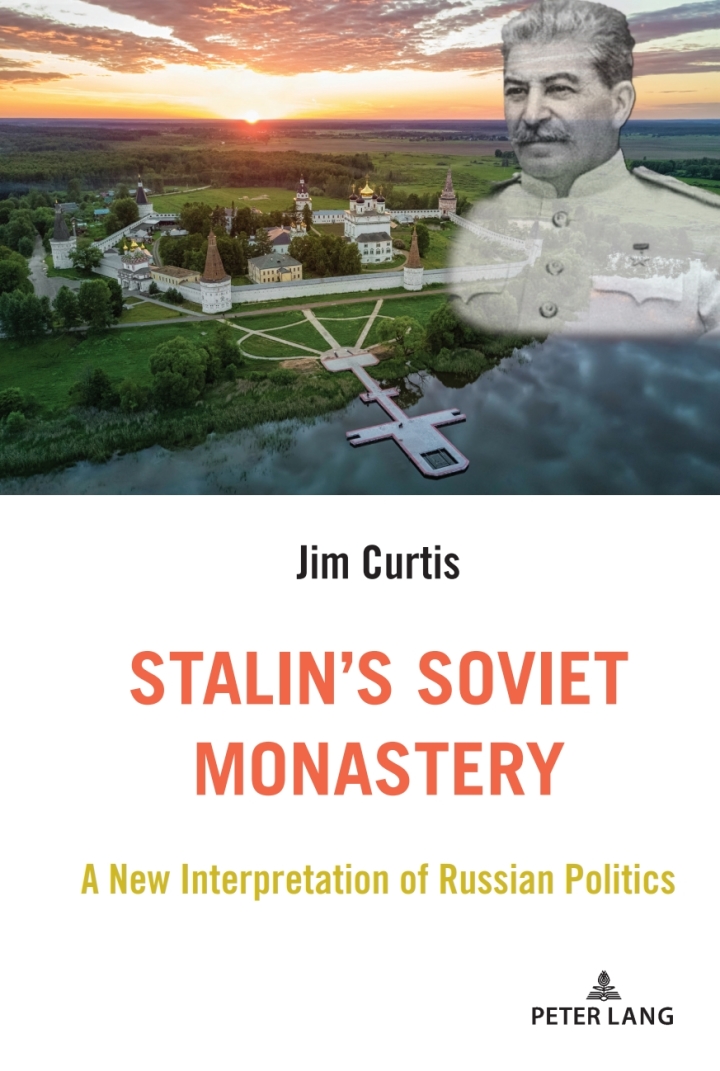
Stalin�s Soviet Monastery: A New Interpretation of Russian Politics
$27.00
In Stalin�s Soviet Monastery Russian scholar Jim Curtis integrates innovative work in linguistics, anthropology, and media theory to develop a holistic analysis of Russian society that includes a theoretically based rationale for ignoring ideology in favor of cultural dynamics.While the young Iosif Djugashvili, later known as Joseph Stalin, was studying to be a priest in an Orthodox seminary, he took on the role that defined his political career, that of a sadistic elder who imposed fiendish vows of poverty, chastity, and obedience on hapless Soviet citizens. As an exercise in historical anthropology, Stalin�s Soviet Monastery emphasizes the role of myth and ritual in Russia, a society with strong residual orality. The imitation of Christ is called passion-suffering, a practice that helps to explain the widespread acquiescence to Stalin�s practices. Stalin was intensely interested in literature, and his favorite author was Fyodor Dostoyevsky. Some passages in Dostoyevsky�s work anticipate key features of Stalinism. An Afterword discusses the development of Russian society after the collapse of the Soviet Union in 1991. Additional ISBNs 9781433171024, 9781433171000, 9781433171017Stalin�s Soviet Monastery: A New Interpretation of Russian Politics 1st Edition is written by Jim Curtis and published by Peter Lang Inc., International Academic Publishers. ISBNs for Stalin�s Soviet Monastery are 9781433170997, 143317099X and the print ISBNs are 9781433190049, 1433190044. Additional ISBNs include 9781433171024, 9781433171000, 9781433171017.
Related products